


.png)
For clinicians working in stroke rehabilitation, recovery is often described in time-bound terms: a window, a critical period, a plateau. However, new research is reshaping that picture. The brain’s capacity to rewire after injury isn’t tied to a calendar the way we once assumed. And the most powerful tool clinicians have for driving that rewiring is something therapists already do every day. The real question isn’t whether to deliver it; it is whether they can deliver enough of it.
The purpose of this blog is to explore the science of neuroplasticity in stroke recovery: how it works, when it’s accessible, and why repetition is the lever that turns recovery potential into measurable outcomes across the full continuum of care.
How Neuroplasticity Drives Stroke Recovery
Neuroplasticity refers to the nervous system’s ability to reorganize and adapt after injury. Following a stroke, the brain can create new connections and strengthen surviving pathways as patients repeatedly practice meaningful movement. Through this technique of repetitive, task-specific training, the brain can begin to relearn skills that were affected by injury and support recovery over time.
The clinical principles behind this process were systematically articulated by Kleim and Jones in 2008. Their ten principles of experience-dependent neural plasticity remain the foundation of activity-based neurorehabilitation. Several are especially relevant for stroke:
- Use it or lose it: Skills and movement patterns that aren’t practiced can weaken over time.
- Repetition matters: Meaningful change requires sustained, repeated activation.
- Intensity matters: Greater effort and challenge produce greater change.
- Specificity matters: Training the target task is what improves the target task.
- Time matters: The responsiveness of the brain shifts across recovery, but doesn’t disappear.
We know that neuroplasticity can be harnessed, but the question now is how can we reliably deliver the conditions that activate it.
The Recovery Continuum: Longer Than We Once Thought
For decades, the prevailing assumption was that meaningful motor recovery happened in the first three to six months post-stroke, after which patients were considered “stable” or worse, “plateaued.” Recent research has substantially complicated that picture.
The Critical Period After Stroke Study (CPASS) identified a window of heightened plasticity roughly 60 to 90 days post-stroke. During that window, an additional dose of upper-extremity therapy produced significantly greater motor gains than the same therapy delivered earlier or later. The findings confirmed what animal research had long suggested: there is a sensitive period in human stroke recovery when the brain is especially responsive to training.
But sensitive isn’t the same as singular. Additional studies found that the trajectory of motor recovery extends well beyond one year post-stroke, and another demonstrated that markers of plasticity remain accessible in chronic stroke survivors. What's especially significant is that research has shown that individuals discharged from physical therapy because they had reached a “plateau” in walking function still made significant gains in stepping activity and gait efficiency when given access to intensive locomotor training afterward.
Stroke recovery isn’t a sprint with a hard deadline, it’s a longer journey. From the early sensitive period through the so-called chronic plateau, the brain remains capable of meaningful adaptation when given the right activity.
Repetition Is the Driver, and Most Patients Aren’t Getting Enough
If neuroplasticity is the engine of recovery, repetition is the fuel, and this is true regardless of where a patient sits on the recovery spectrum. Whether the goal is taking advantage of the early sensitive period or driving further gains in someone who has been labeled chronic, the underlying ingredient is the same: enough task-specific, high-intensity activity to push the nervous system to adapt.
How does that compare to what stroke patients actually receive? In a landmark observational study, they recorded movement repetitions across 312 physical and occupational therapy sessions. The average session included about 32 repetitions of upper-extremity task practice and roughly 367 lower-extremity steps. Those numbers fall well short of the doses associated with neuroplastic change. Research protocols routinely deliver several times that volume, often at high cardiovascular intensity.
A 2020 study addressed this gap directly. For ambulatory individuals more than six months out from stroke, spinal cord injury, or brain injury, the guideline issued a strong recommendation in favor of task-specific, high-intensity stepping practice, including overground, treadmill-based, and stair-stepping training delivered at high cardiovascular intensity. Recent randomized trials have continued to reinforce this conclusion, with high-intensity interval training producing greater gains in walking speed and capacity than moderate-activity controls in both subacute and chronic stroke populations.
The pattern across studies is clear: when training intensity and repetition are sufficient, patients improve, including patients previously considered to have plateaued.
Closing the Gap Between Science and Practice
Putting that research into practice is the hard part. Research protocols that drive measurable plastic change typically deliver 1,500 to 3,000 stepping repetitions per session at high cardiovascular intensity. In a typical 30 to 60 minute clinical session, with one to two clinicians physically supporting a patient with hemiparesis, hitting those numbers is rarely possible. Short lengths of stay, staffing ratios that often require two to four clinicians for safe gait training, patient acuity in early recovery, and clinician fatigue all constrain what’s deliverable in any setting.
This is where activity-based therapy and high-repetition rehab tools come in. They don’t replace clinical judgment, but instead give clinicians a way to actually deliver the dose the science calls for. Body-weight support systems, robotic-assisted gait trainers, and task-specific overground tools expand what’s possible in one 30-60 minute session, turning the structural constraint into a solvable one.
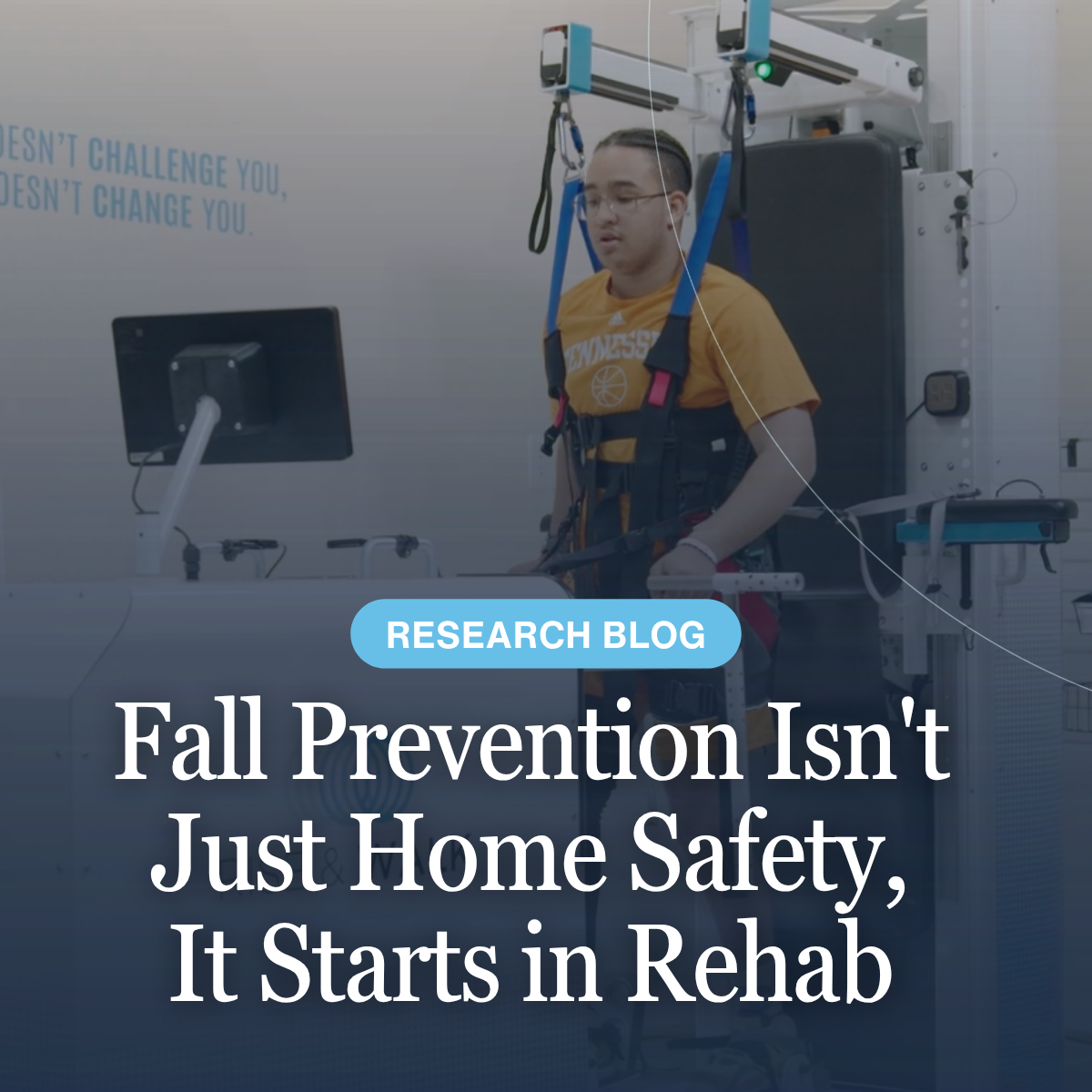
The Rise&Walk® InClinic is one example of how rehab technology has evolved to make recovery possible for stroke patients across the spectrum, including chronic and 'plateaued' patients. Unlike earlier-generation robotic gait trainers that delivered largely passive movement, the Rise&Walk was designed to enable active, high-intensity engagement – the kind that drives the neuroplastic change this article has been discussing. The system supports clinicians in delivering over 2,500 stepping repetitions in a standard 60-minute session with a single clinician. Across U.S. rehabilitation hospitals, Rise&Walk has supported over sixteen million stepping repetitions and over 21,000 therapy sessions for stroke and other neurologic patient populations. That puts research-grade dosing within reach in everyday inpatient and outpatient settings.
Recovery Is a Response to the Right Input
Neuroplasticity is driven by consistent, meaningful input to the nervous system, and research continues to clarify what types of training best support recovery. Across the recovery continuum, from the early stages after injury through the chronic phase once thought to represent a plateau, the brain remains capable of meaningful change. The clinician’s role is to create the conditions for that change, and increasingly, the tools used in rehabilitation are a part of the answer.
Curious how high-intensity, high-repetition training is being delivered in clinical settings across the U.S.? Whether you’re refining your stroke protocol or evaluating new rehabilitation technologies for your facility, our team is happy to walk you through it. Schedule a demo with our team.
.png)
