For patients, discharge day often feels like a finish line, but for the people driving them home, it's the first day of a new role. The spouse who will help with every transfer, the adult child who will walk beside a parent on an uneven sidewalk, the parent learning to support a teenager after a spinal cord injury. Each leaves the rehab hospital with new responsibilities, and often with less preparation than they need.
November is National Family Caregivers Month, and this year's theme from the Caregiver Action Network, "Care Connects Us," is a fitting reminder for rehab teams. The care patients receive doesn't end at the hospital door, rather, it’s carried forward by the patient’s family. The purpose of this blog is to look at how rehab teams can better prepare caregivers for mobility at home, what discharge readiness really looks like, and where recovery can continue after the last inpatient session.
The Readiness Gap
Family caregivers are carrying more than ever before. According to AARP and the National Alliance for Caregiving's Caregiving in the U.S. 2025 report, 63 million Americans, nearly 1 in 4 adults, provided ongoing care for a family member in the past year, which is an increase of 20 million from 2015. Yet only about 11% have received training to help with daily activities like bathing, dressing, and getting around, and just over 20% have formal training in medical and nursing tasks.
For families caring for a loved one after a neurological injury or condition, mobility is often where the gap shows first. A caregiver may watch dozens of therapy sessions and still feel unsure and worried about guarding a loved one on stairs, managing a car transfer, or responding to a near-fall. Additionally, the Caregiver Action Network notes that roughly 40% of caregivers don't see themselves as caregivers at all, which makes them less likely to look for help on their own.
This gap is where rehab teams can provide additional support. Inpatient rehab may be the only time a family receives structured, hands-on mobility training from someone who understands the patient's specific deficits. Providing training support to the family caregiver can help close this gap and allow them to gain confidence in helping their loved one continue recovery at home.
Caregiver Training that Sticks
Most clinicians already build family training into their patient’s care plan, but the harder challenge is how to make it hold up once the family is on its own. A few principles help:
- Start Early – Bringing caregivers into sessions well before discharge week allows training to build over several visits instead of one crowded afternoon.
- Have Them Drive, Not Just Watch – Allow them time to gain hands-on practice with transfers, using a gait belt, and guarding their loved one from near-falls. This method teaches a caregiver how they can actually support their loved one instead of relying on what they’ve seen and been told.
- Train For the Home, Not the Gym – Ask about entry steps into the home, their bathroom layout, what flooring they have, and what pathways matter most, like going from the bedroom to the bathroom, or driveway to the front door, then practice those tasks with appropriate obstacles.
- Protect the Caregiver – Family caregivers face many of the same lifting and bracing risks clinicians do, but without the training or equipment. Teaching basic body mechanics with proper lifting techniques protects both the caregiver and the loved one recovering.
- Plan for Falls – Caregivers should leave knowing how to assist their loved one safely after a fall, and when it’s best to call for professional help instead of attempting a lift alone.
Training doesn't have to stop at discharge, either. Since January 2024, Medicare has covered caregiver training services (CPT 97550–97552) in outpatient settings, allowing therapists to train caregivers without the patient present after the patient is discharged from the facility. When handing a patient off to outpatient care, it's worth making sure the next provider knows this option is available.
What Discharge Readiness Really Means
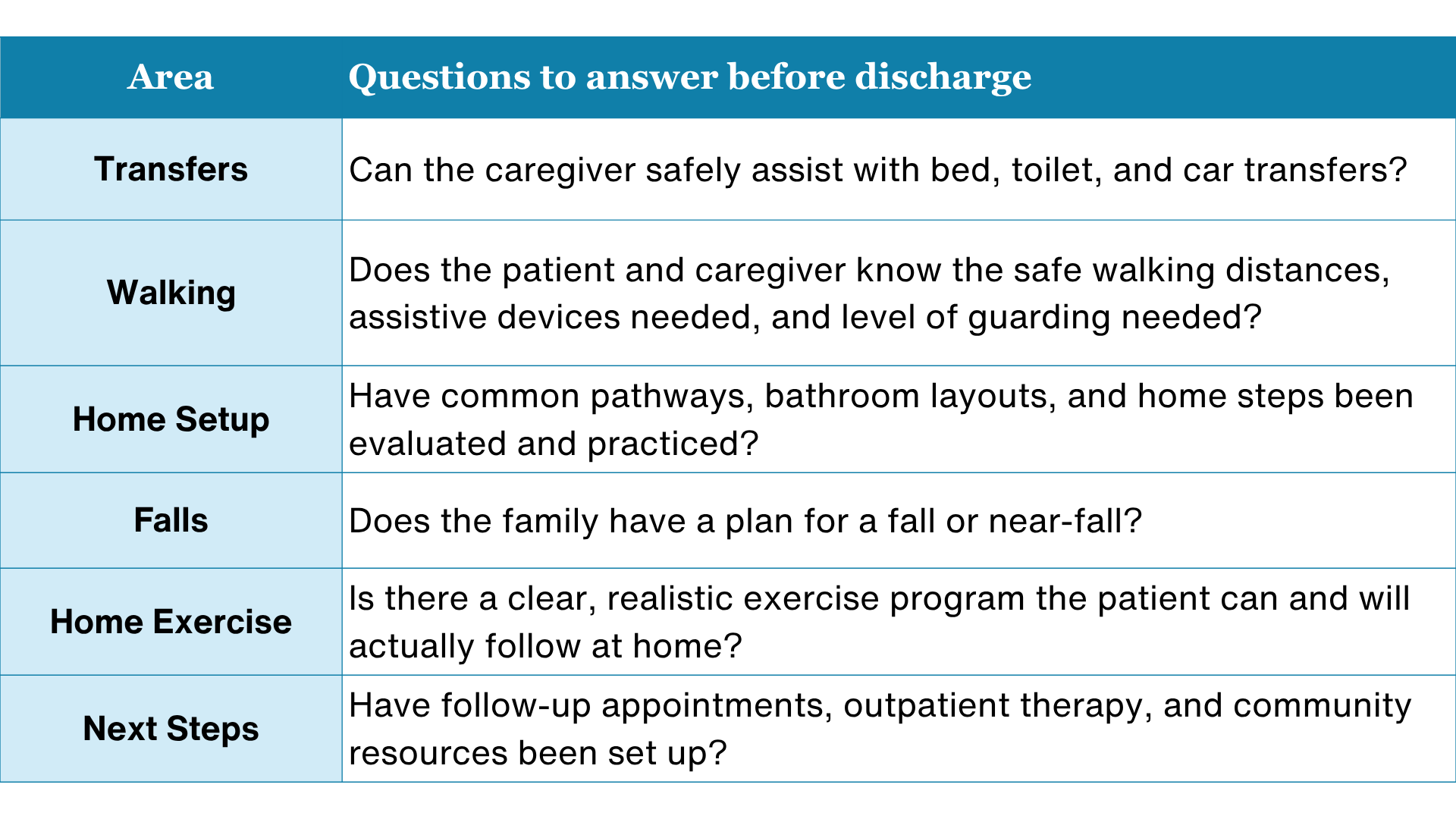
Discharge readiness is usually measured by the patient’s functional scores, goals met, and a safe destination. All of which matter, but a patient is truly only as ready as the household they’re going home to. A practical mobility readiness checklist can help and might include:
In every session, the patient’s side of discharge readiness is built in. Endurance, balance, and confidence on their feet come from practice, and a lot of it. More practice in a safe environment gives patients more capacity, and more confidence, to continue recovery at home.
Recovery Keeps Going After Discharge
One of the most important messages families can hear is that discharge isn't the end of recovery. Although it’s ongoing, many patients and caregivers still believe recovery progress stops a few months after an injury or stroke. In a randomized trial published in JAMA Neurology, people living with chronic stroke who completed high-intensity interval walking training significantly improved their walking capacity, with the largest gains after 12 weeks of training (Boyne et al., 2023).
But the challenge is keeping that work going at home once the structure of daily therapy disappears. A 2024 scoping review of community-based mobility training after stroke found that several program models improved walking speed and endurance, but also noted that "the acquired functional recovery can be lost when discontinuing the intervention." Calling out how not continuing recovery at home can make patients progress regress.
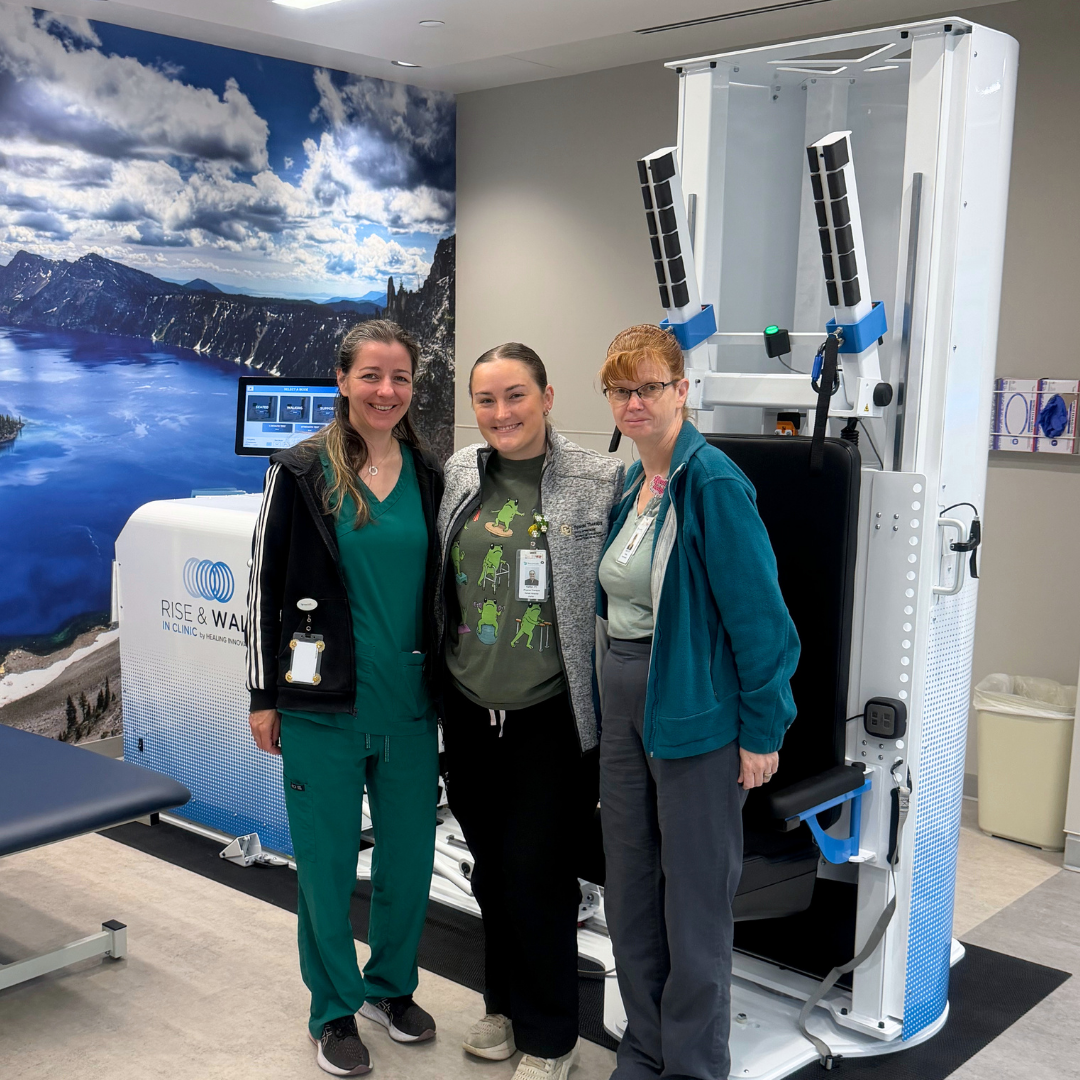
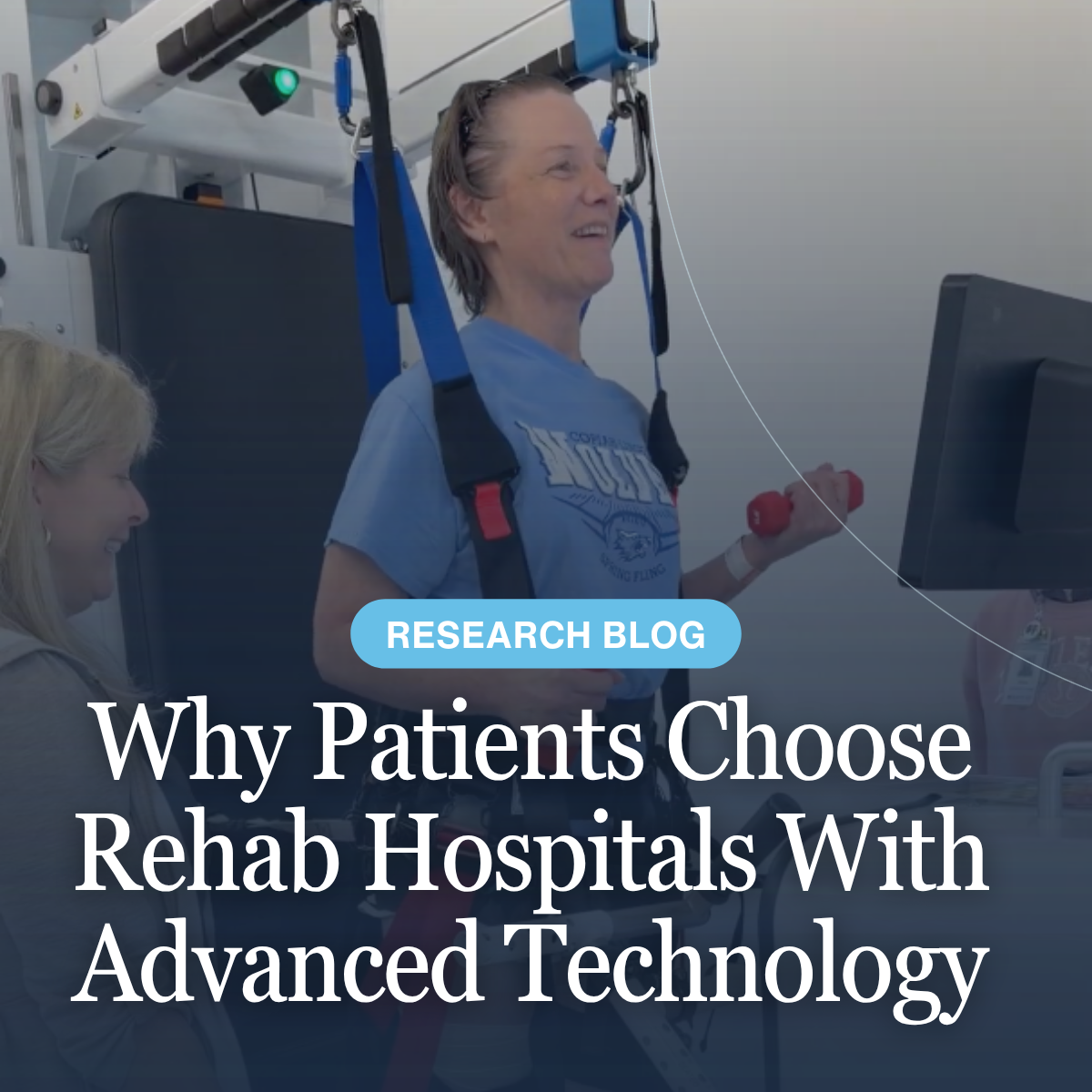
That's why community-based programs deserve a place in discharge planning discussions. Neurogyms and activity-based therapy centers offer much of what patients lose at discharge: specialized equipment, staff who understand neurological conditions, and a reason to keep showing up for their recovery. Programs all over the country such as CORE, Project Walk NJ, Project Walk Boston, The 34 Project, NeuAbility, Stride SCI, and Nashville NeuroGym give patients a place to keep training in their own communities. Each of these programs uses the Rise&Walk® InClinic, which allows patients to take 1,500–2,000 steps in a session, compared with roughly 50–350 steps in conventional gait training. Because the system provides built-in support, staff don’t have to physically brace the patient and can focus on coaching each patient and progressing their training.
Additionally, community-based wellness programs provide the value of a larger care community to family caregivers. Allowing families to meet others who are also on a recovery journey, connect with other caregivers, and share the physical work with trained clinicians. For rehab teams, a simple step is knowing which programs exist locally and including them in discharge conversations alongside outpatient therapy and home exercise.
A Realistic View
It’s important to remember that not every patient will walk independently, and recovery looks different for every family. Some caregivers are able to provide hands-on support for years, while others might not be able to. Good preparation won't change every outcome, but it can change how confident a family feels, how safely they move together, and whether recovery has a path forward after discharge.
Caregivers need support for themselves as well. AARP's report found that nearly one in four caregivers struggle to take care of their own health, while also caring for their loved one. Providing caregiver resources to family members is part of preparing them also.
Care Connects Us All
The walk home starts long before discharge day and it's built in every session where a patient practices one more step and every session where a caregiver practices one more transfer. This National Family Caregivers Month, it's a good time to ask: are the families leaving our hospitals ready to carry that care forward?
At Healing Innovations, we see recovery as a team effort that includes clinicians, patients, and the families who support them. Curious how the Rise&Walk supports safe, high-repetition gait training during inpatient rehab and across the recovery continuum? Schedule a conversation with our team.