When a patient is ready to leave the acute care hospital, the decision about where they go next often happens quickly. A case manager hands the family a list of facilities, a physician makes a recommendation, or a spouse or adult child starts searching online from a hospital waiting room. Within a few days, sometimes a few hours, a family chooses where their loved one will spend some of the most important weeks of their recovery.
For business liaisons, that window is where much of the work happens. You help referral sources, families, and patients understand what makes your facility the right fit, and more and more often, technology is part of that conversation. The purpose of this blog is to look at what research tells us about how patients and families choose a rehab hospital, why advanced technology has become a meaningful part of that decision, and how liaisons can talk about it in a way that is credible and useful to the families they serve.
How families choose a rehab hospital
Choosing post-acute care is rarely a slow, carefully researched decision. In a study of stroke survivors published in the Journal of Neurologic Physical Therapy, more than half said someone else selected their rehab setting for them, most often a physician or family member. Half said they needed more information at discharge, including what rehabilitation services to expect. And as one participant put it, "I don't know. I just ended up here."
However, that dynamic is shifting. Under the CMS discharge planning rule finalized in 2019, hospitals must help patients and families choose a post-acute provider by sharing quality information and focusing on each patient's goals and preferences. Families are being invited into the decision more directly, and they are arriving with questions.
Research on what shapes these choices points to a consistent set of factors:
- Advice from trusted clinicians – Physician and care team recommendations remain the most influential factor.
- Location and access – Proximity to home matters, especially for family members who plan to visit often or take them to outpatient appointments.
- Reputation and word of mouth – Recommendations from friends, relatives, and online reviews carry real weight in the decision.
- The environment and equipment – In a 2023 study of stroke patients and families in BMC Geriatrics, one patient explained choosing a rehabilitation hospital based on "the environment, equipment, and recommendations from friends."
For liaisons, the takeaway is clear. Referral sources still carry enormous influence, but families are now active participants, and they are looking for concrete reasons to trust a facility with someone they love.
Why technology builds confidence for patients and families
When families evaluate a hospital, they look for visible evidence of quality and safety. A 2026 national survey from U.S. News & World Report asked 500 adults who had recently arranged care for themselves or a family member what makes a hospital feel safe. After cleanliness, the most common answer was visible technology and equipment, cited by 36% of respondents. Older adults in particular said up-to-date technology and equipment give them a strong sense of safety. The same survey found that more than a third of respondents would travel more than three hours for specialized treatment.
These results make sense. For a family facing a stroke, spinal cord injury, or brain injury, the future can feel uncertain. Seeing modern rehabilitation technology makes the plan feel tangible. It tells families that the facility invests in its patients, that its therapists work with current, evidence-based tools, and that there is a clear path forward.
Patients feel the difference, too. In a study of stroke survivors who used robotic gait technology early in their rehabilitation, most said the device improved their confidence and helped them focus on their steps, and most said they would choose to keep using it. Clinicians see the same response. "Every patient I've used the Rise&Walk® with has shown improvement… some have left walking, while others have built more strength… just getting them on their feet has really made them happy in their recovery," says Denise Torres, PT at Ascension Saint Thomas Rehabilitation Hospital, a Lifepoint Health partner.
What makes technology meaningful, not just impressive
Not every piece of equipment tells the same story. Families and referral sources are best served when a liaison can explain what the technology actually does for patients. A few qualities make technology a strong differentiator for a facility:
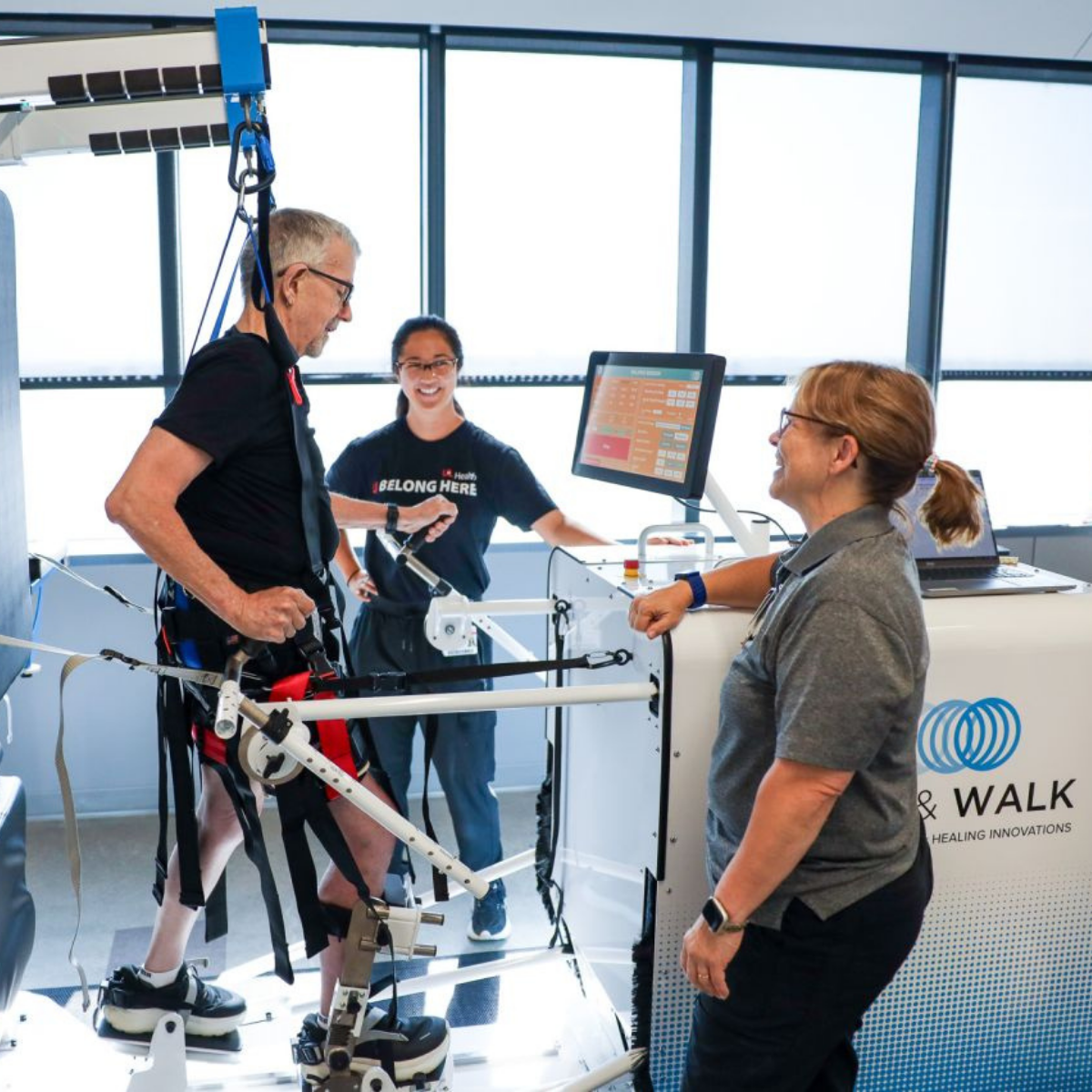
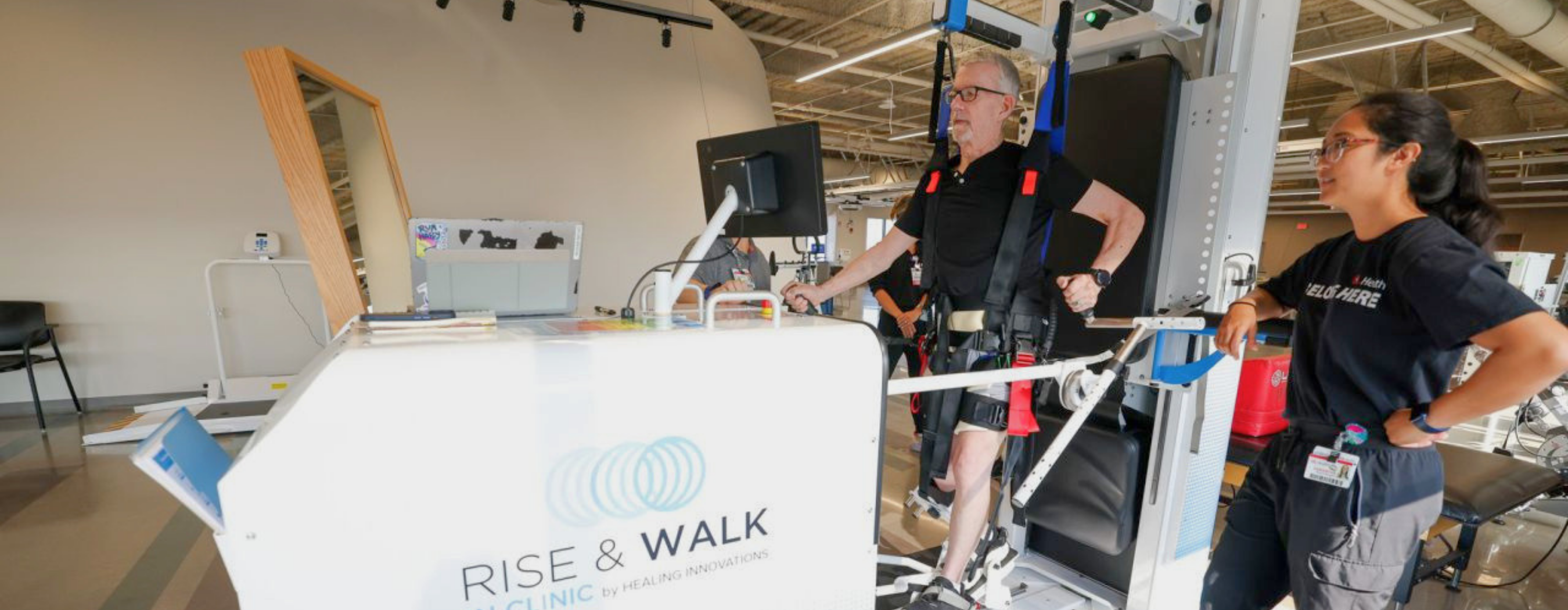
- Serves a wide range of patients – Rise&Walk combines seated, standing, and walking modes in a single system, supporting patients with stroke, spinal cord injury, brain injury, and other neurological conditions at different stages of recovery. For a liaison, this gives one answer that applies to many different referrals.
- Increases what happens in therapy – A conventional 30-minute gait training session may include 50 to 350 steps. A 30-minute Rise&Walk session can deliver 1,500 to 2,000 steps, a volume of practice that is a key driver of recovery.
- Supported by outcomes data – In a retrospective study of inpatient stroke rehabilitation, patients who trained with Rise&Walk had 18 times greater odds of improvement in chair-to-bed transfers and 7 times greater odds of improvement in walking 10 feet on CMS mobility measures, compared to standard care.
- Proven in real rehab hospitals – Rise&Walk has supported more than 3,500 patients through more than 22 million steps at rehabilitation hospitals across the country, including national systems such as Ernest Health.
Lynn Fleming, Chief Clinical Officer of Ernest Health, which deployed Rise&Walk across 19 inpatient rehabilitation hospitals, describes the impact this way: "By integrating this technology into our hospitals' therapy programs, we enhance patient care while also providing objective data to track patient progress, reducing injury risks for staff, and improving overall therapy efficiency."
Technology is one part of a bigger decision
Although technology now plays a larger role in the decision making process, location, insurance coverage, physician recommendations, and the strength of the therapy team will always shape where patients go, and it should. No device replaces skilled clinicians, nor does it guarantee every patient will walk independently again. The strongest message a facility can share is not that technology guarantees recovery, but that it gives every patient the best possible opportunity to reach their goals.
Helping families choose with confidence
Families want to feel that they are choosing a place where their loved one will be safe, supported, and given every chance possible to recover. Advanced technology helps make that promise visible. At Healing Innovations, we see this every day in the facilities using Rise&Walk, where the technology helps clinicians do more for their patients and gives families a clear picture of what recovery can look like.
Curious how Rise&Walk could strengthen your facility's story with referral partners and families? Schedule a conversation with our team and see the technology in action.